
Resources
Books and reflections on psychotherapy, psychoanalysis, grief, and the stories that shape a life.
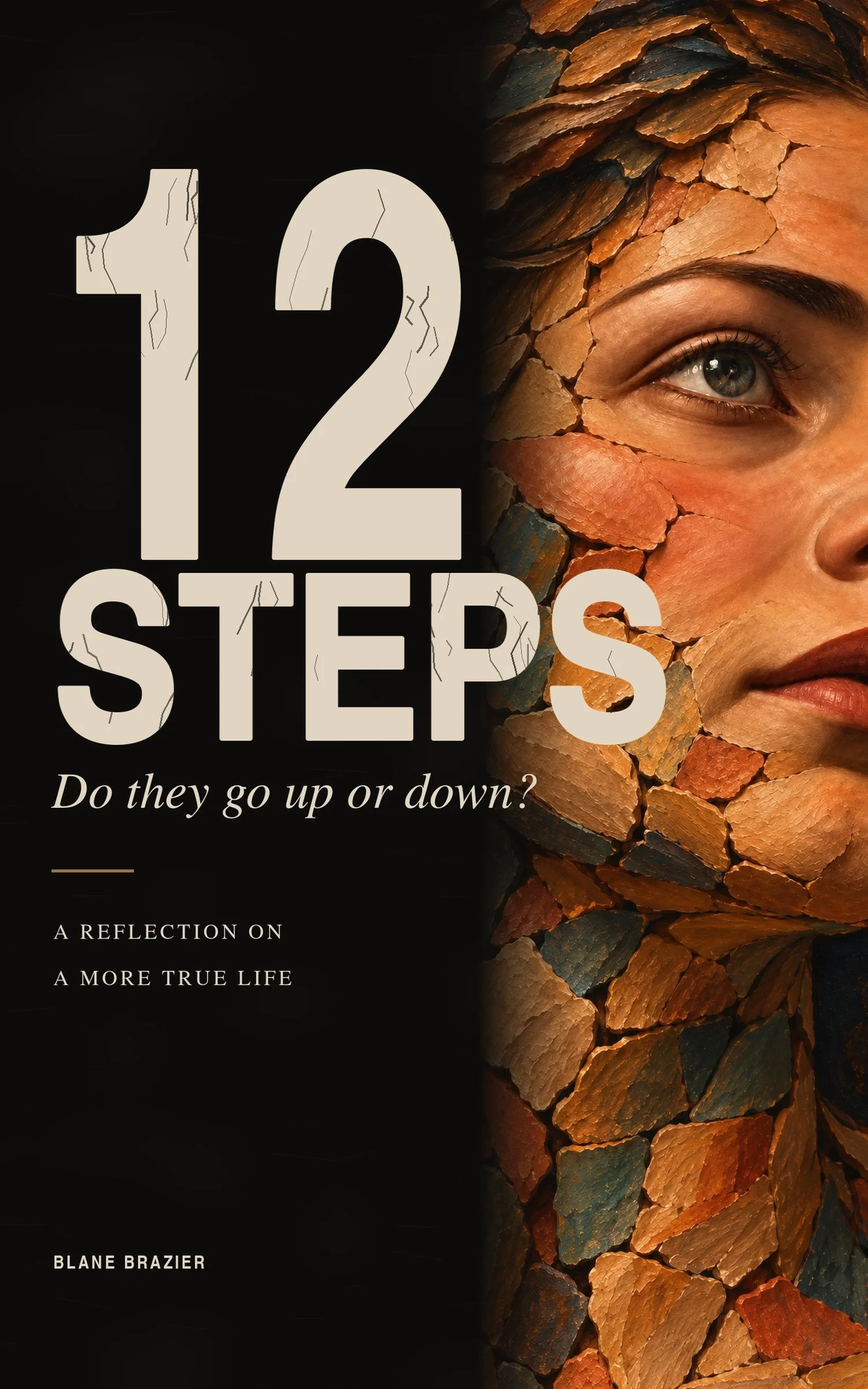
12 Steps: Do They Go Up or Down?
A reflection on a more true life.
What if the Twelve Steps are not a ladder toward becoming better, but a descent beneath the images we use to appear good? Drawing from Alcoholics Anonymous, psychoanalysis, and theological reflection, Blane Brazier explores recovery as the relinquishment of performance, righteousness, resentment, and the demand to be seen in a certain way.
Buy on AmazonFrom the blog
Read the latest posts below, or explore earlier entries through Older Posts.

Grieving God?
How our Faith journey may be stuck in complicated grief
Grief is a complex and challenging experience for anyone to navigate, but complicating factors can further complicate the process. Spiritual grief is one such factor that can bring about such unique challenges and complexities.
Spiritual grief can arise when an individual experiences a loss intertwined with their belief system, faith, or spirituality. This loss can come in the form of losing a religious community, facing moral dilemmas, or loss of faith itself. Such a profound loss can lead to feelings of confusion, anger, guilt, shame, hopelessness, and disorientation.
In these cases, the person's spiritual practices may provide comfort, or they may trigger further emotional distress, causing them to question their beliefs, values, and purpose. It is not uncommon for individuals with complicated spiritual grief to feel isolated, misunderstood, or unable to connect with loved ones who may not share their beliefs or understand the depth of their grief.
Laurie Burke and colleagues have studied complicated spiritual grief, including struggles in a person’s relationship with God and with a religious community after bereavement. Their work recognizes that spiritual life may be a site of distress as well as a source of comfort. (Burke et al., 2014; 2021)
In therapy, there can be space to explore your relationship with faith, examine beliefs and values, and identify what has been lost. New practices or communities may become important, but they are not an obligation. The work is not about finding easy answers or quick solutions; it is about making room for the complexity of a person’s identity, beliefs, and desire.
An image of God may also carry expectations learned in earlier relationships: approval, disappointment, protection, or abandonment. This is the additional psychoanalytic question I bring to spiritual grief. What becomes difficult to say when the one who should offer comfort also seems absent or accusing?
Burke and colleagues’ Inventory of Complicated Spiritual Grief is a research measure of spiritual distress in bereavement; it is not a substitute for a clinical conversation. The linked papers describe its development and revision.